

Editorial
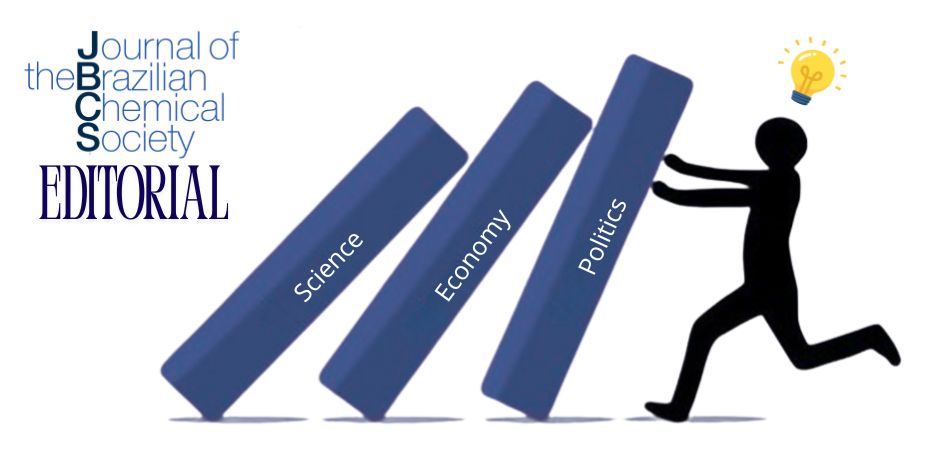
JBCS and BMOS: an Organic Chemistry Odyssey
JBCS, vol. 37, 2026
Throughout its history, the Brazilian Meeting on Organic Synthesis (BMOS) has accompanied the transformation of organic chemistry in Brazil and worldwide. The 20th edition of the meeting, marking the 44th anniversary of the first gathering of organic chemists in Brazil, could offer us an opportunity to revisit the history of what is the largest meeting devoted to Organic Synthesis in Brazil. However, this has been very well documented recently!1 In addition, we, the editors, who received our academic training between the 2000s and the early 2010s, would be limiting ourselves to telling a story in the third person.
But writing a commemorative issue of the Journal of the Brazilian Chemical Society (JBCS) dedicated to BMOS means, in somehow, engaging with its history, which presents the first challenge: how to do so in the first person? We chose to reflect on the evolution of the field by examining the BMOS Special Issues in JBCS in 1996,2 1998,3 and 2001,4 alongside the 2026 edition. What changes have occurred in organic synthesis over the past decades? Among these many transformations, what core elements have endured?
Looking back at these Special Issues, a particularly interesting perspective emerges: they capture distinct moments in organic synthesis and offer a true snapshot of the field at those times. Given the short interval between the 1996 and 2001 Special Issues, we will treat these three issues as representative of the same period. In them, we find problems, strategies, and tools that remain relevant today, while other approaches have since been profoundly transformed.
Comparing these moments revealed a particularly significant feature: evolution does not occur by replacing old questions with new ones but by progressively expanding how we formulate and answer them.
For example, in 1996, the total synthesis of natural products was among the topics addressed. The synthetic target was often the ultimate goal, the Ithaka we were looking for. We should not forget that just two years earlier, in 1994, Holton et al.5 had stood out in the “race for Taxol”, in which research groups around the world competed to complete the first total synthesis of this potent chemotherapeutic agent and to solve the problem of its global supply. With the final product as the objective, yields at each reaction step naturally assumed a central role.
Many papers in these three Special Issues include terms such as enantio- and diastereoselective syntheses in their titles, reflecting the importance of stereochemical control and asymmetric induction. Total synthesis often served as the final proving ground where a methodology developed by one research group would be put to the test. Looking at this Special Issue, we find a paper that fits this description exactly: an enantioselective total synthesis using a methodology developed by the research group itself.
Curiously, however, a type of selectivity already described in 1996 was not yet part of our repertoire: chemoselectivity, that is, the transformation of one functional group in the presence of other functional groups that remain unchanged.6 This idea became more prominent with the development of late-stage functionalization, a process that selectively alters an already complex molecule.
Nowadays, with countless molecules needing to be synthesized and tested to bring a new drug to market, the time required to prepare a compound in the early stages of drug discovery can be as important as, or even more important than, the yield obtained in the synthesis. This Special Issue features a review article on late-stage C–H bond functionalization and a methodology for the late-stage introduction of trisubstituted imidazoles.
Since we are discussing the process of bringing a drug to market, this Special Issue also includes examples in which synthetic efficiency is central. One presents a concise synthesis of a chemotherapeutic agent, with microwaveassisted cyclization as the key step. Another combines a continuous-flow reaction with enzymatic kinetic resolution to synthesize an active pharmaceutical ingredient (API) intermediate.
In 1996, microwave-assisted reactions were already used in organic synthesis, but in recent years we have seen, worldwide, the emergence of enabling technologies as a distinct area of organic synthesis. This is also reflected in this Special Issue: some papers directly compare conventional heating techniques with microwave irradiation, while others address mechanochemistry and continuous-flow chemistry. These technologies arise not only to perform known transformations more efficiently but, in many cases, to enable transformations that would not be possible in any other way today.
Photocatalysis is another good example, but to discuss it, we need to go back in our own history. Radical reactions have been known for a long time and, for many years, were considered unpredictable and difficult to control, to the point that radical cyclization was not considered a key step in the total synthesis of a natural product until 1976, with the total synthesis of sativene and copacamphene by Bakuzis et al.7 here in Brazil.
In the 1996 and 1998 Special Issues, we find papers on radical additions. In both cases, the radicals were generated using tributyltin hydride as the initiator. In one paper, the corresponding author is known for naming one of the most important reactions in radical chemistry: the Giese reaction.
Radical chemistry appears again in this Special Issue, now accompanied by new tools for investigating and understanding its reactivity. One paper uses photocatalysis to study hydrogen atom transfer processes, combining experimental and theoretical approaches to elucidate the factors that govern them. Coincidentally, or perhaps not so coincidentally, the Giese reaction is used as proof of concept. This issue also presents a low-cost, modular photoreactor, validated across different transformations, as part of a proposal to make photochemistry more accessible to laboratories with limited resources.
The focus on efficiency, accessibility, and sustainability also appears in other current studies. Photochemistry, microwaves, continuous flow, and mechanochemistry for example, are integrated into a broader perspective on biomass valorization. Agro-industrial waste and renewable feedstocks are no longer merely alternative carbon sources; they are increasingly viewed as resources for producing higher-value compounds.
There is no doubt that enabling technologies are also related to sustainability. In 1996, Green Chemistry was emerging as a response to pollution prevention. Interestingly, the 12 Principles of Green Chemistry were not published until 1998! In this Special Issue, we find papers discussing more sustainable and greener syntheses.
In 1996, the term “organocatalysis” had not yet been introduced. It was officially coined only in 2000, when the work of MacMillan and co-workers,8 and List et al.9 helped consolidate and give enormous visibility to this new field. Notably, MacMillan spoke at the Itapema meeting in 2007 and at the Bento Gonçalves meeting in 2024. List also spoke at the Itapema meeting, and Barbas spoke at the Brasília BMOS in 2011. Did you attend any of these events, or perhaps all of them?
Regarding organocatalysis, this Special Issue features a paper that highlights how advances in the field are linked to new insights into catalyst mechanisms. It uses various spectroscopic and spectrometric methods to observe intermediates, shedding light on why certain catalyst structures outperform others.
This example points to a broader transformation: analytical tools have moved beyond merely detecting and confirming product structures and have become instruments for understanding the reaction itself. Nuclear magnetic resonance, for example, can reveal which species are actually present in the reaction medium and, therefore, which of them are in fact responsible for reactivity.
Organotellurium chemistry, for instance, was previously explored primarily through the transformations it could enable and in this Special Issue, this related chemistry is examined using advanced spectroscopic tools that allow the reactive species themselves to become the object of investigation.
This change also becomes apparent when we consider the goal of synthesis. In 1996, one of the papers sought to prepare new molecules with antithrombotic potential, using organic synthesis to obtain these substances and to test their biological activity. Nearly three decades later, this Special Issue brings together examples focused on developing new drug candidates, detecting chemical species, investigating photophysical and electrochemical properties, assessing biological activity, and valorizing renewable resources.
This integration goes even further when synthesis is connected to biological evaluation. Miniaturized platforms, automation, and direct screening strategies enable the preparation and testing of large numbers of compounds more rapidly and with less need for purification. Synthesis thus ceases to be an isolated step and becomes part of a continuous workflow for generating, evaluating, and selecting molecules.
The target molecule remains a central focus, but it is no longer necessarily the endpoint: it is also a tool for addressing questions across medicine, biology, materials science, and environmental science.
The breadth of this perspective is also evident in the diverse synthetic strategies showcased in this Special Issue, ranging from metal-carbene-mediated insertions to diversity-oriented synthesis, highlighting the expanding array of methods available to the modern synthetic chemist.
It is precisely this expansion of possibilities that becomes most evident when we place these snapshots side by side. Today, a synthetic transformation can involve catalysis, photochemistry, electrochemistry, mechanochemistry, advanced spectroscopic techniques, computational modeling, automation, or data analysis. The development of a methodology may be guided not only by yield and selectivity but also by considerations of sustainability, scalability, resource availability, biological compatibility, and potential applications.
But these transformations were not made up solely of new reactions, methodologies, or techniques. There is an aspect of this history that concerns the people who lived
through these changes. For our generation, BMOS was much more than a scientific meeting: it was a milestone in our training as scientists.
It is difficult to separate our education as synthetic organic chemists from our memories of these meetings. As students, we arrived at BMOS with the chemistry we were conducting in our own thesis and the one we knew from the literature. There, these perspectives converged. For many of us, it was the first time we could see, gathered in the same place, the organic synthesis being carried out in different parts of Brazil and at leading research centers around the world.
We met foreign researchers whose names we had previously encountered mainly in the references of the papers we read. We attended their lectures, heard how they approached synthetic problems, learned about their strategies, and, above all, discovered that the chemistry we had admired from afar was being done by people we could talk to, ask questions of, and eventually work with.
For many of us, BMOS was also a place of confirmation. It was there that the synthetic chemistry we had been learning and practicing took on a broader, more concrete dimension. By discovering the diversity, sophistication, and beauty of the chemistry produced in Brazil and abroad, many of us felt we had chosen the right path. The lectures, discussions, and conversations not only expanded our knowledge but also helped define the kind of scientists we wanted to become.
Some of these meetings had consequences we would not fully understand until years later. The researchers we met at BMOS became mentors and hosts during our international research experiences. The contacts established at these meetings opened doors for Brazilian students and young researchers to work in different laboratories, learn and experience new methodologies and ways of doing science, and later bring part of that experience back to Brazil.
Ideas traveled. Techniques traveled. People traveled.
Along with them came new questions, new ways of approaching problems, and new possibilities for carrying out organic synthesis. Some of these experiences contributed to the formation of new research groups, the introduction of methodologies not yet established in our laboratories, and the foundation of networks that remain active to this day.
Perhaps this is the best way to view this odyssey. Organic synthesis has advanced, expanding its tools, possibilities, and connections with other fields, while preserving fundamental questions: how do we synthesize a molecule? How do we understand and control its reactivity? How do we prepare a compound more efficiently? And, especially, which molecules should we synthesize, and which problems can we help address?
BMOS has also advanced. Like organic synthesis, it has preserved something essential: its power to bring people, ideas, and questions together. This JBCS Special Issue is therefore another snapshot of this trajectory. A portrait of organic synthesis in motion, carrying questions, tools, and possibilities we cannot yet imagine. This is also why BMOS occupies such a special place in our history: at every meeting, we reaffirm our commitment to the organic synthesis we pursue in Brazil and, above all, to the community we have built around it.
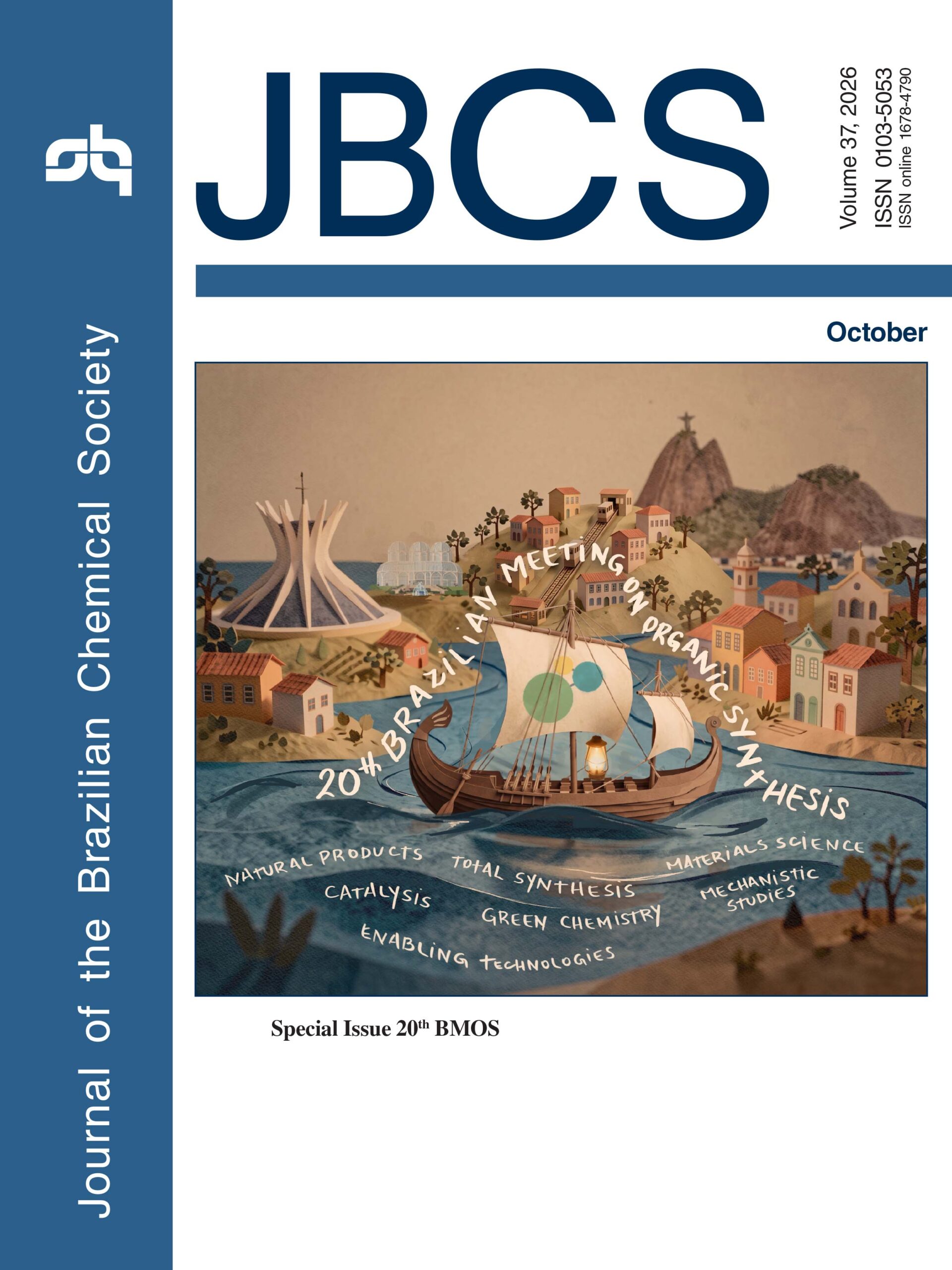
Over the years, JBCS has also undergone continuous evolution. Beginning in 2011, JBCS introduced a new cover format featuring an image highlighting a paper published in each issue. Unlike the three previous BMOS Special Issues in JBCS, this edition also features a cover image specially designed for the occasion: wherever you are on your own Odyssey through organic chemistry, what are your Cyclops, Sirens or Scylla and Charybdis? Whatever they may be, may your journey be long, rewarding, and rich in discovery, with Ithaka always giving you a reason to keep sailing! We invite readers to view the cover image on the JBCS website (https://jbcs.sbq.org.br/) and Instagram account (@JBCS_sbq).
As part of the current evolution of JBCS, the editorial guidelines and policies have also been revised, including certified training for new associate editors, endorsed by the Brazilian Chemical Society. Several editors and members of the JBCS editorial teams have close ties to BMOS; some have even served as general secretaries and chairs of the meeting.
Finally, we thank the authors for submitting their high-quality work and for contributing to the dissemination of their scientific results. We also appreciate the editorial staff for their internal efforts and the reviewers, who carefully and respectfully evaluated all papers in accordance with JBCS strict criteria, ensuring transparency and avoiding conflicts of interest. We hope readers find this Special Issue a fruitful and enriching experience, as we, the editors, did while preparing it!
Vida longa ao BMOS!10
Giovanni W. Amarantea
Executive Editor of the Journal of the Brazilian Chemical Society
aGrupo de Pesquisas em Metodologias Sintéticas, Departamento de Química, Universidade Federal de Juiz de Fora (UFJF), 36036-900 Juiz de Fora-MG, Brazil
https://orcid.org/0000-0003-1004-5395
Emilio C. de Lucca Jr.b
Guest Editor of the Journal of the Brazilian Chemical Society
bInstituto de Química, Universidade Estadual de Campinas, 13083-970 Campinas-SP, Brazil
https://orcid.org/0000-0002-7732-3559
Fernanda Gadini Finellic
Guest Editor of the Journal of the Brazilian Chemical Society
cInstituto de Pesquisas de Produtos Naturais, Universidade Federal do Rio de Janeiro, 21941-599 Rio de Janeiro-RJ, Brazil
https://orcid.org/0000-0003-4145-2153
References
- Rosa, F. A.; da Silva, F. C.; Amarante, G. W.; de Oliveira, K. T.; Victor, M. M.; Cunha, S. D.; Química Orgânica Sintética: Brasil 2022, vol. 3; E-papers e SBQ: São Paulo, Brasil, 2022. [Crossref]
- Special Issue on Organic Synthesis (VII BMOS), Journal of the Brazilian Chemical Society, 1996. [Link] accessed September 2026
- Special Issue on Organic Synthesis (VIII BMOS), Journal of the Brazilian Chemical Society, 1998. [Link] accessed September 2026
- Special Issue on Organic Synthesis (IX BMOS), Journal of the Brazilian Chemical Society, 2001. [Link] accessed September 2026
- Holton, R. A.; Somoza, C.; Kim, H. B.; Liang, F.; Biediger, R. J.; Boatman, P. D.; Shindo, M.; Smith, C. C.; Kim, S.; J. Am. Chem. Soc. 1994, 116, 1597. [Crossref]
- Trost, B. M.; Science 1983, 219, 245. [Crossref]
- Bakuzis, P.; Campos, O. O. S.; Bakuzis, M. L. F.; J. Org. Chem. 1976, 41, 3261. [Crossref]
- Ahrendt, K. A.; Borths, C. J.; MacMillan, D. W. C.; J. Am. Chem. Soc. 2000, 122, 4243. [Crossref]
- List, B.; Lerner, R. A.; Barbas, C. F.; J. Am. Chem. Soc. 2000, 122, 2395. [Crossref]
- The sentence means “Long live BMOS!”.
Link - Licença CC-BY
Assine a newsletter da PubliSBQ!
Esteja sempre atualizado(a) sobre as últimas publicações da SBQ.
[mc4wp_form id="123"]
A PubliSBQ
A PubliSBQ é um órgão destinado a atividades de difusão científica, técnica, de interesse didático e de divulgação de notícias. Sua principal missão é a produção de publicações de interesse da comunidade química nacional: profissionais de química da universidade e da indústria, estudantes de química do ensino médio, universitário e de pós-graduação, reunindo, também, mecanismos de difusão da química para o público leigo e infantojuvenil.








Entre em contato
Endereço da PubliSBQ
Sociedade Brasileira de Química
CNPJ: 49.353.568/0001-85
Av. Prof. Lineu Prestes, 748
Bloco 3 superior, sala 371
CEP 05508-000 Cidade Universitária
São Paulo, Brasil

A PubliSBQ é um órgão destinado a atividades de difusão científica, técnica, de interesse didático e de divulgação de notícias. Sua principal missão é a produção de publicações de interesse da comunidade química nacional: profissionais de química da universidade e da indústria, estudantes de química do ensino médio, universitário e de pós-graduação, reunindo, também, mecanismos de difusão da química para o público leigo e infanto-juvenil.
Mais informações sobre nósNotícias Recentes



© 2025 PubliSBQ. Todos os direitos reservados.